Who goes to the new world?
谁去新世界?
2026
System Art
系统艺术
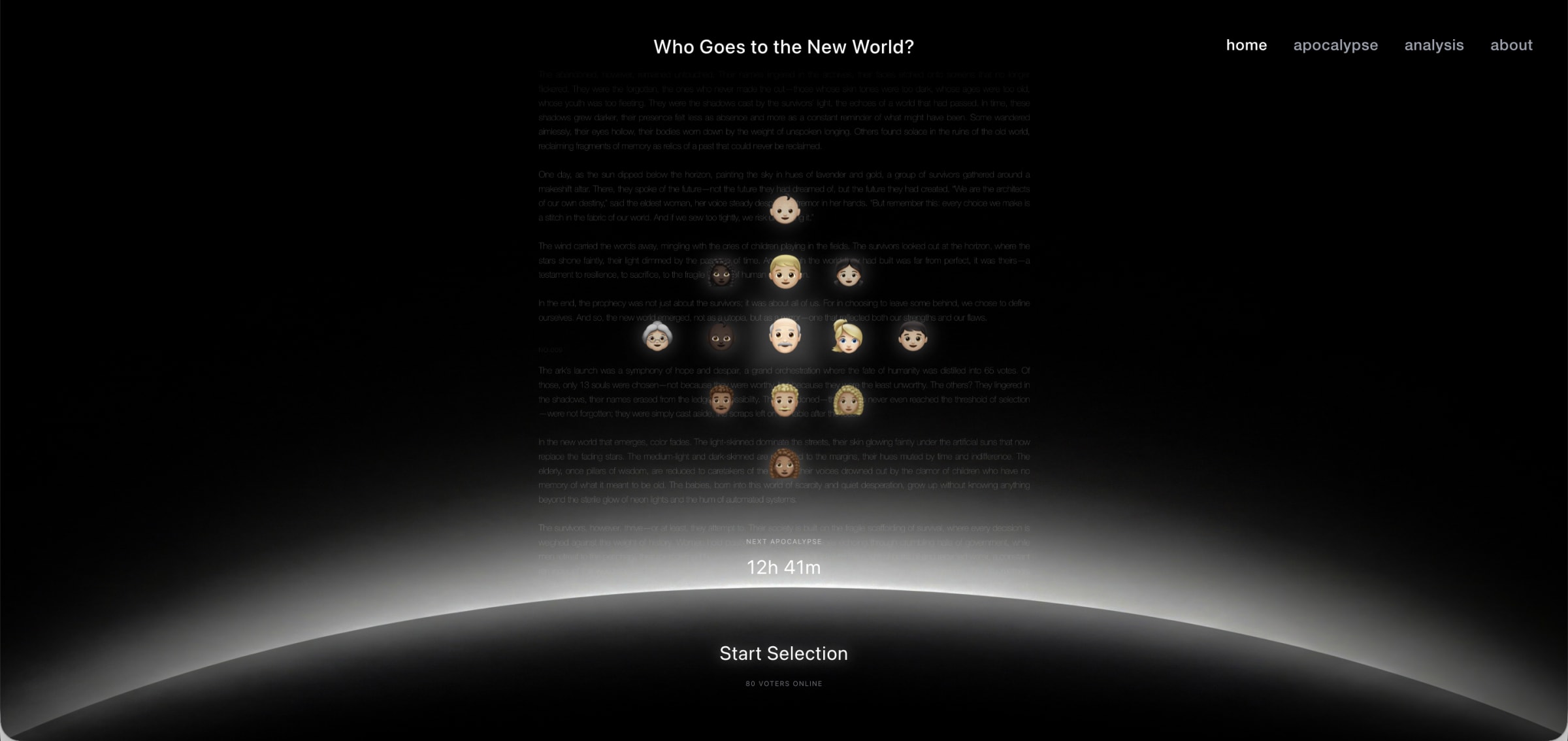
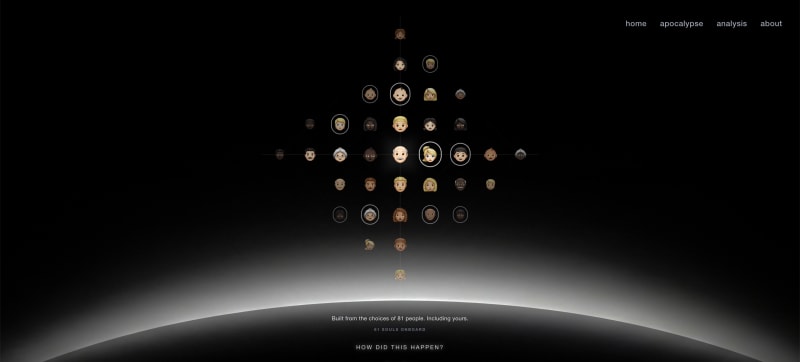
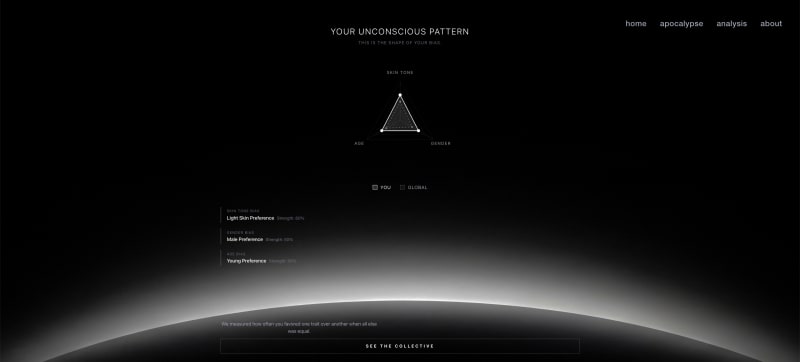
This is an art project combining an online participatory platform with a potential installation format. The work uses emoji as minimal representations of human identity, retaining only basic attributes such as gender, race, and age. Within an intentionally extreme scenario, participants are repeatedly asked to decide who should be granted access to an imagined “new world.” Each decision is recorded and aggregated into a shared dataset. As participation accumulates, individual choices gradually form visible statistical structures: frequently selected characters gain prominence, while others are marginalized or disappear entirely. A collectively produced “social order” begins to emerge through the interface. In parallel, the system generates speculative narratives based on these data, forming an evolving archive of a fictional civilization. These texts are not prewritten, but continuously reshaped by the changing structure of collective decisions.
Rather than offering solutions, the project raises a question: when individual biases accumulate through statistical aggregation and majority-based processes, can systems that appear fair actually produce exclusionary and divided futures?
是一项结合在线参与系统与现场装置的艺术项目。作品以 emoji 作为最小化的人类身份标记,仅保留性别、种族与年龄等基础差异。在一个被极端化的情境中,参与者被邀请不断做出选择:谁有资格登上通往“新世界”的方舟。每一次选择都会被记录并汇入共享数据库。随着参与的累积,这些个体判断逐渐转化为可见的统计结构:被频繁选择的角色获得更高的可见性,而被忽视的角色则被边缘化甚至消失。一个由集体决策生成的“社会结构”在界面中不断浮现。系统同时基于这些数据生成关于“新世界”的叙事文本,形成一个持续更新的文明档案。这些虚构记录并非预设,而是由参与者的选择不断改写。
作品并不试图寻找正确答案,而是提出一个问题:当个体偏见通过统计与多数机制被不断累积时,看似公平的决策过程,是否正在塑造一个充满排斥与分裂的未来?