Refractory
不应期
2024
Moving Image
影像


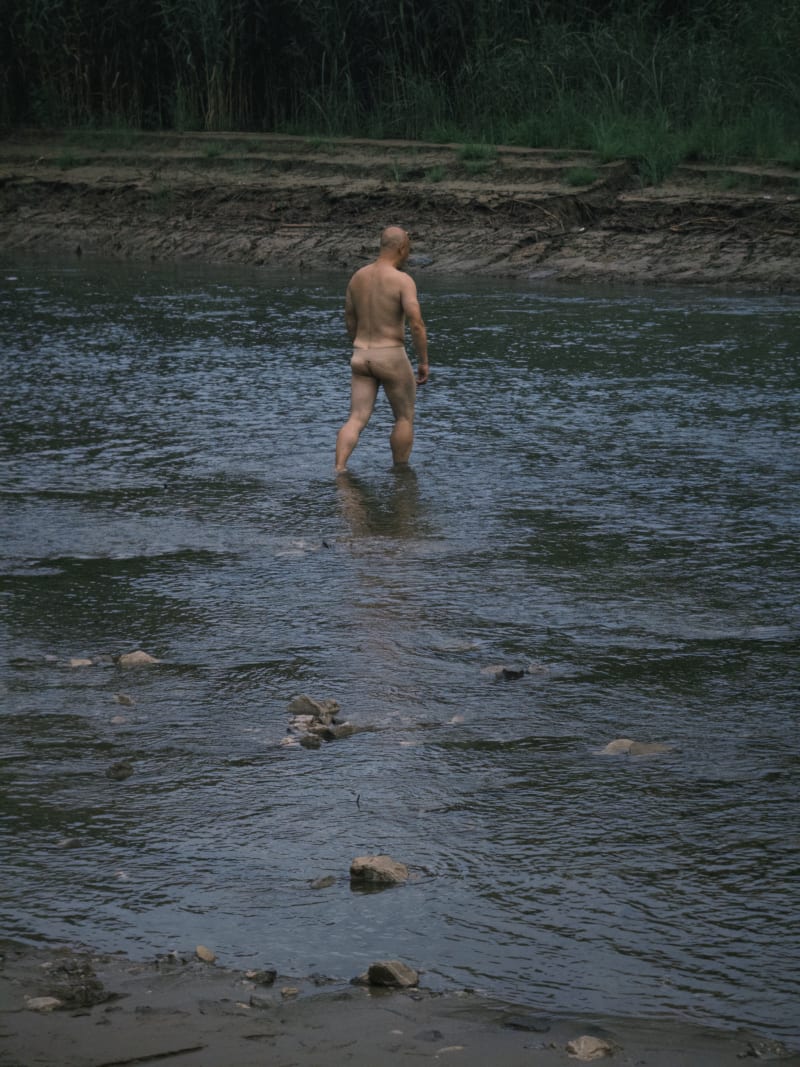
Refractory continues the story of The Little Prince. On the eve of humanity’s departure from Earth, the Old Prince and the Little Prince set out on a journey. Along the way, they encounter six groups of figures, each embodying a different human desire. Faced with an irreversible ending, people begin to reflect on their mistakes, relinquish their obsessions, and offer a belated apology to the world. It is as if, given another chance, things might finally turn out differently. The film takes the refractory period as its central metaphor. In physiological terms, the refractory period refers to the brief stage of exhaustion and calm that follows climax. The work transforms this experience into a civilizational allegory: when desire temporarily subsides, humanity seems finally able to recognize its own arrogance. Yet when desire inevitably returns, will the same cycle begin again?
《不应期》延续了《小王子》的故事。在人类即将离开地球的前夕,老王子与小王子踏上一段旅途。沿途中,他们遇见六组象征不同欲望的人物。在无法挽回的结局面前,人们开始反思自己的过错,放下执念,并向世界表达迟来的歉意。仿佛只要再来一次,一切就会有所不同。 影片以“不应期”作为核心隐喻。在生理意义上,不应期指高潮之后短暂的疲软与冷静阶段。作品将这一经验转化为一种文明寓言:当欲望暂时退去,人类似乎终于意识到自身的傲慢。然而当欲望再次复苏,是否仍会走向同样的循环?


Formally, the film is constructed in a manner close to installation art, emphasizing the relationship between material and space. A large number of artifacts—sculptures, installations, and props—appear throughout the film, forming its material foundation. The characters are rendered as highly symbolic figures, while the performances are reduced to an extremely minimal level, approaching what might be described as “prop-like people.” Through the moving image, these objects and figures are reorganized and gradually unfold into a spatial structure that lies somewhere between installation and narrative.
The project originates from my sense of perplexity toward the present condition of the world. After World War II, human society appeared to undergo a profound period of reflection and attempted to establish a new order. Yet over the past decade, certain tendencies once regarded with caution have re-emerged, and history seems to be repeating itself in different forms.
In my view, human civilization often manifests what might be described as a “masculine state.” As power accumulates, it tends to expand into a form of self-inflation that seeks to reshape the world and others. Only after catastrophic mistakes does humanity enter a brief period of reflection. Yet such clarity rarely lasts, and history soon resumes its course.
Within the film, the Old Prince resembles a figure of repeated attempts—a would-be savior searching for a path forward for humanity, only to return again and again to a similar starting point. After each complete failure, people temporarily relinquish their obsessions, as if the next attempt might finally lead somewhere different. Yet will the next time truly be any different?
这部影像以接近装置艺术的方式进行构建,强调物质与空间之间的关系。影片中出现大量雕塑、装置与道具等人造物,而人物则被处理为高度符号化的形象。表演被压缩到极简的程度,更接近一种“道具化的人”。这些物质与人物在影像中被重新组织,逐渐展开为一个介于装置与叙事之间的空间。
这件作品源于我对当下处境的一种困惑。二战之后,人类社会经历了一次深刻的反思,并试图重新建立秩序。然而在过去十余年中,一些曾被警惕的倾向再次出现,历史似乎正在以不同的方式重复自身。在我的理解中,人类文明呈现出一种“男性状态”:在不断积累力量的过程中逐渐产生自我膨胀,并试图改造世界与他者。往往只有在巨大的错误之后,人类才会进入短暂的反思阶段。但这种清醒很难持续,历史也随之重新启动。老王子试图探索人类前进的道路,却一次次回到相似的起点。在彻底失败之后,人们都会暂时放下执念,仿佛下次就会有所不同。然而,下次真的会有所不同吗?